
Baldur's Gate 3: 10 Most Influential Deities, Ranked
Baldur's Gate 3 takes its lore from the Forgotten Realms, including its deities. They have a huge pantheon, but some are more involved with the plot.
Anyone who has checked out the cleric class in Baldur's Gate 3 will find that there is an overwhelmingly large pantheon in Faerun. That's without including some of the more obscure deities, who do make an appearance. These deities, as with most of the lore in Baldur's Gate 3, share the lore of the Dungeons and Dragons Forgotten Realms.
While some of these deities meld into the background world-building, and some are referenced and involved under occasional circumstances, some deities play a very important role in the Baldur's Gate 3 storyline. The following gods are absolutely integral to the plot.
10Lolth

In the lore of Dungeons and Dragons 5th Edition, Lolth is the chaotic evil drow goddess. Also known as the Queen of Spiders, she represents the trickery and war domains. Lolth is not necessarily one of the most prevalent deities in Baldur's Gate 3, but she does get mentioned a fair deal in the Underdark.
Lolth's influence may be seen most clearly in Act Two when players encounter Kar'niss, leading a caravan through the Shadow-Cursed Lands. Kar'niss is a drider, a drow cursed by Lolth for failing her, doomed to live their lives as a maddened drow and spider hybrid.
9Silvanus

Silvanus may be one of the first deities that players see mentioned a lot. Silvanus is a true neutral god, representing the wilds and the nature domain. Known as the Oak Father, he is revered by the druids in the Druid Grove, one of the first major locations that players will visit.
While the companion character, Halsin, is less vocal about his religion than some companions, players who get to know him will hear the Oak Father's blessings on occasion. While not hugely prominent throughout, interactions discussing Silvanus and his beliefs can be quite integral in Act One.
8Umberlee

Umberlee is a chaotic evil sea goddess, representing the tempest domain. While she may be an evil goddess by Dungeons and Dragons standards, Umberlee has a large temple and plenty of worshipers, which players can find in Baldur's Gate 3 in Act Three.
Umberlee and her worshipers are involved in an intriguing quest surrounding the recent death of one of her followers and a strange presence in the waters of the harbor. The temple also gives life to Umberlee as a goddess, as players can talk to the various NPCs who have come to pay their respects to the Queen of the Depths before they depart for the sea.
7Bane
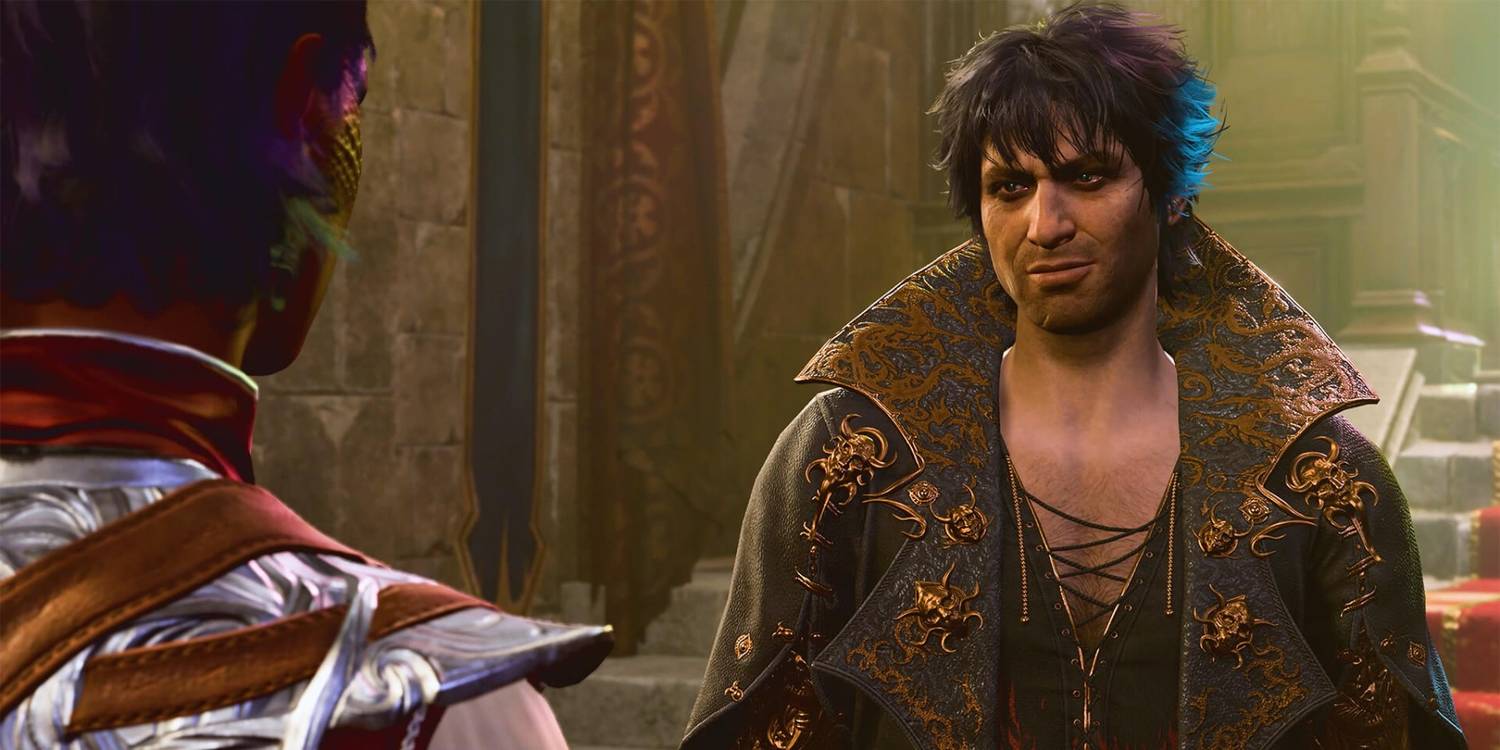
Bane is a prevalent deity who comes as a package deal within the Baldur's Gate 3 storyline. Bane is a lawful evil god, representing tyrants and the domains of order and war, and he is one of The Dead Three.
Since The Dead Three are the deities who have commanded their chosen to control the Absolute to enslave Faerun in Baldur's Gate 3, Bane is automatically a pretty important deity to the plot. His chosen, Gortash, is a primary antagonist in the game. Despite this involvement, players don't actually get to see or hear all that much about Bane compared to some of the other gods.
6Myrkul

Speaking of The Dead Three, Myrkul is another god in the trio. He is a neutral evil god of necromancy and the death domain, and his chosen is Ketheric Thorm. Ketheric Thorm is the main antagonist in the second act of Baldur's Gate 3, and interactions with him can culminate in a grand boss fight.
What makes Myrkul more prevalent than Bane is that an avatar of Myrkul himself can tag into that fight. In a sense, players get to battle the Lord of Bones himself, and it makes for a pretty intense clash.
5Selune

Selune is a chaotic good moon goddess, traditionally representing the knowledge, life, and twilight domains. Within Baldur's Gate 3, she is a very important deity, whose plot ties are flooded with spoilers. Many prominent characters follow Selune. Notably, the aasimar, Dame Aylin, is a daughter of Selune, and her partner, Isobel, is a cleric to the Moonmaiden. Isobel is the daughter of Ketheric Thorm, who also used to worship Selune before Isobel's death.
Most important, however, is the connection between Shadowheart and Selune. As a follower of Shar, Shadowheart despises Selune. But it turns out that Shadowheart and her family were followers of Selune, and Shar stole Shadowheart away, wiping her memories with the goal of raising a Selunite to worship her instead. Given this relationship, playing as a cleric of Selune can lead to some interesting dialogue between player characters and Shadowheart.
4Mystra

Mystra is the lawful neutral goddess of magic, spells, and the weave, associated with the knowledge domain. Her importance to the narrative comes from her ties to the companion character, Gale. The pair have a colorful past, with Gale being a disgraced ex-lover to the goddess.
In an attempt to regain her favor, the foolhardy wizard has managed to absorb a volatile piece of Netherese magic, capable of ending countless lives. Gale's Netherese orb and his past with Mystra are continually relevant plot points, and players can also have some interactions with Mystra.
3Vlaakith

Vlaakith is another deity who is prevalent due to her connection to a companion character, this time the githyanki fighter, Lae'zel. Vlaakith is a tricky deity as, by Dungeons and Dragons lore, Vlaakith isn't a goddess. She is the evil lich queen leader of the githyanki.
In Baldur's Gate 3, however, she is treated as a goddess and seems to have powers akin to one. To put it lightly, players should be wary when defying her avatar. Regardless of her true status, Vlaakith is an integral part of Lae'zel's character and arc, and players can have some particularly interesting interactions with her.
2Shar

Shar is the dark sister of Selune, mentioned previously, a neutral evil deity of loss and night, and related to the death and trickery domains. Shadowheart is, as most players will be aware, a trickery cleric, and Shar is her patron. Of course, it is later revealed that Shar has stolen Shadowheart away as a child for her twisted gain. This conflict between Shadowheart, Shar, and her lost past leads to many engaging interactions throughout the storyline.
While these companion moments are wonderful, interactions with Shar are inevitable for any player. The curse that plagues the Shadow-Cursed Lands is the result of Ketheric Thorm's grief-stricken worship of Shar, and players must progress through the Gauntlet of Shar to complete Act Two. Shar's dark influence is felt throughout the game, even if a player neglects to get involved with Shadowheart's arc.
1Bhaal

As close as Shar's ties are to the main storyline, none can really top the importance of Bhaal, the final deity in The Dead Three. Bhaal is a neutral evil god of murder and the death domain. His followers are bloodthirsty and ruthless assassins, and this is embodied perfectly by his chosen, Orin the Red. Orin is a terrifying antagonist, who repeatedly ambushes and intimidates the party. She makes sure her god's presence is felt.
While this alone may not have made Bhaal rank so highly, his prevalence only furthers if players choose the Dark Urge past for their character. It is slowly revealed that they experience these dark urges because, like Orin, they are a progeny of Bhaal. This makes Bhaal not only integral to the main storyline of Baldur's Gate 3 but also potentially a huge part of the player character's backstory.
Baldur's Gate 3 is available on PC and PlayStation 5. A version for Xbox Series X/S is currently in development.
No comments
Note: Only a member of this blog may post a comment.